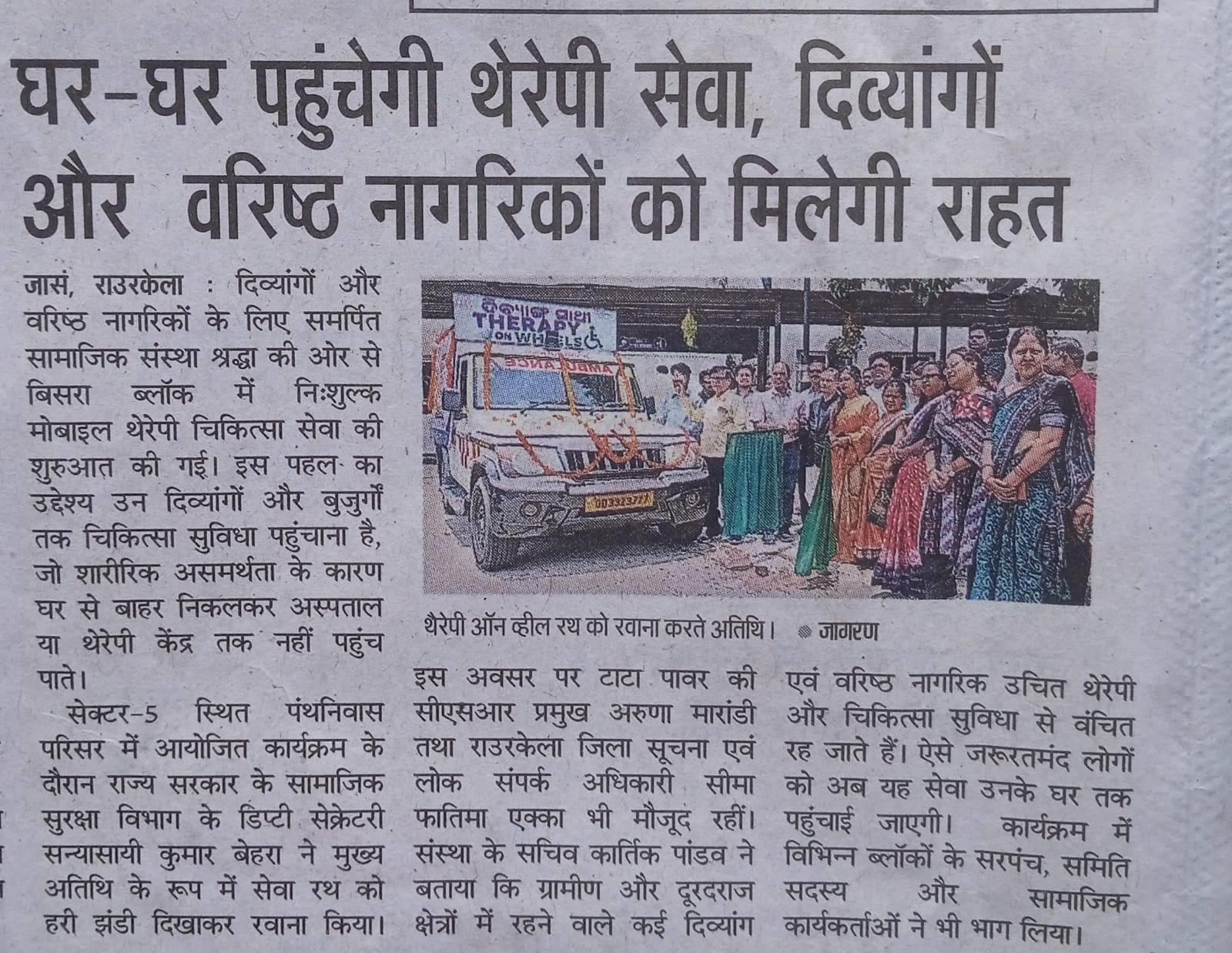
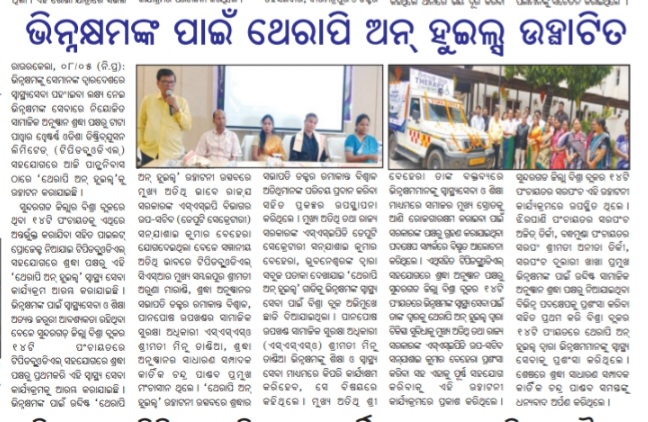
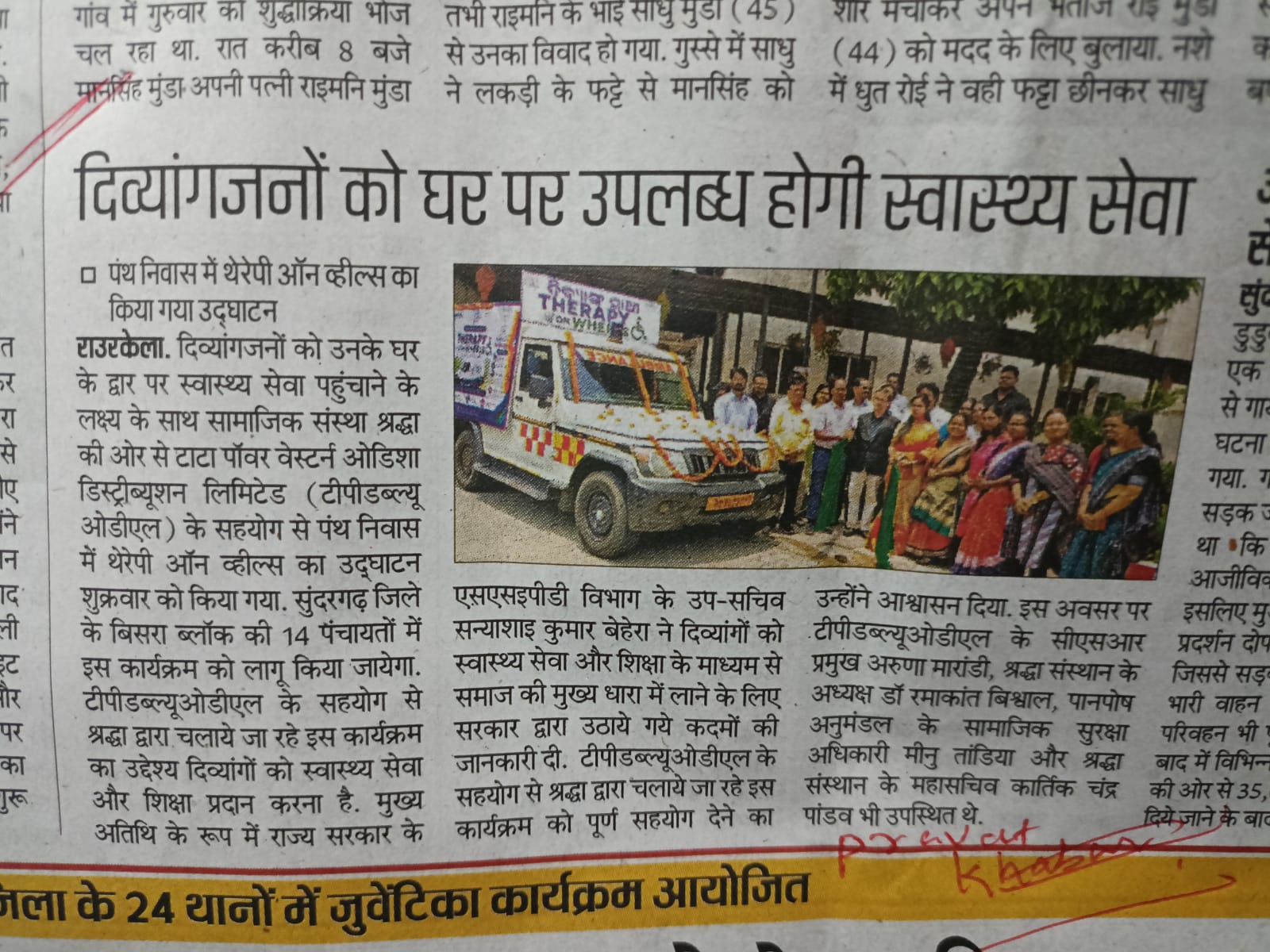
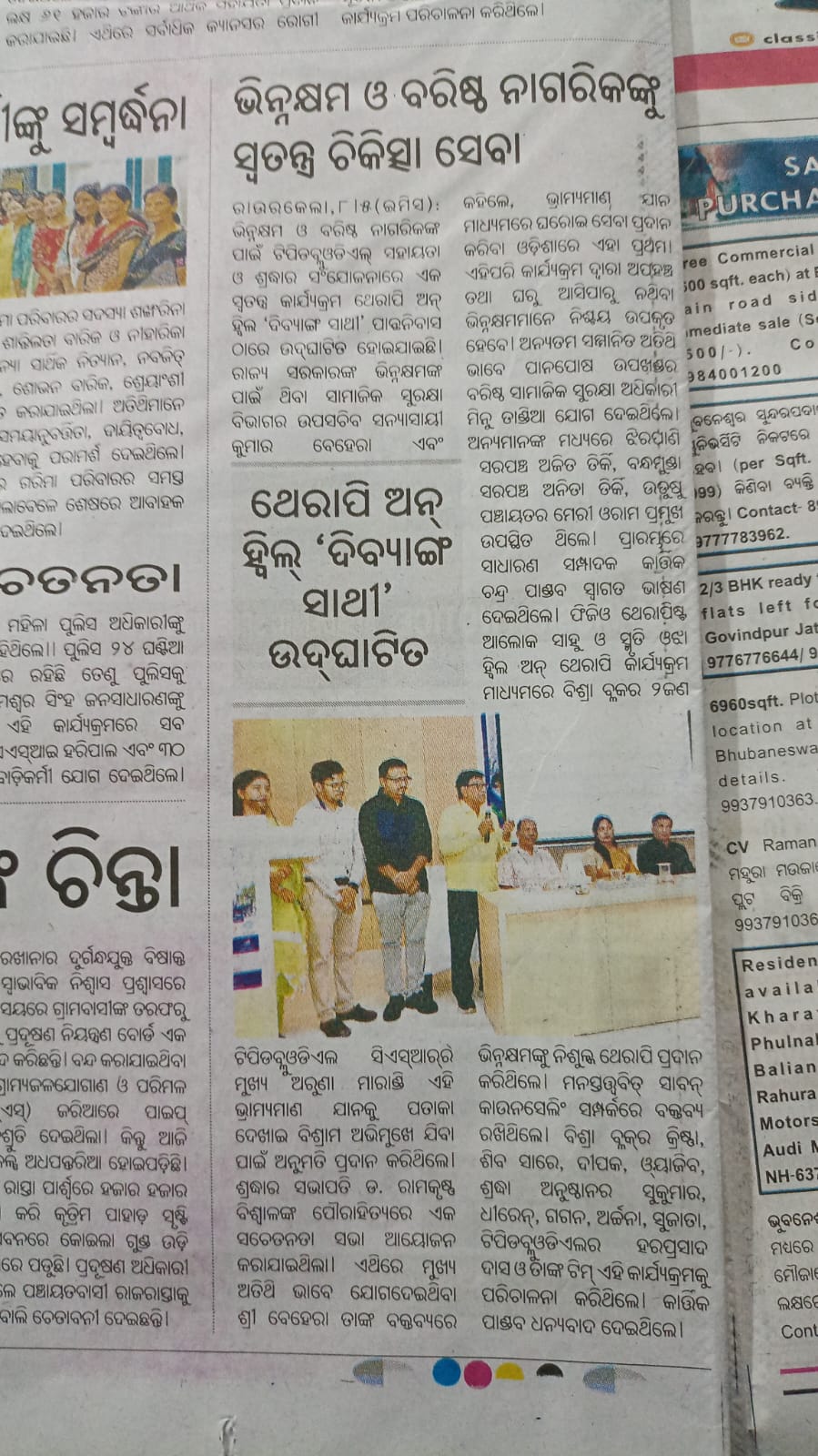
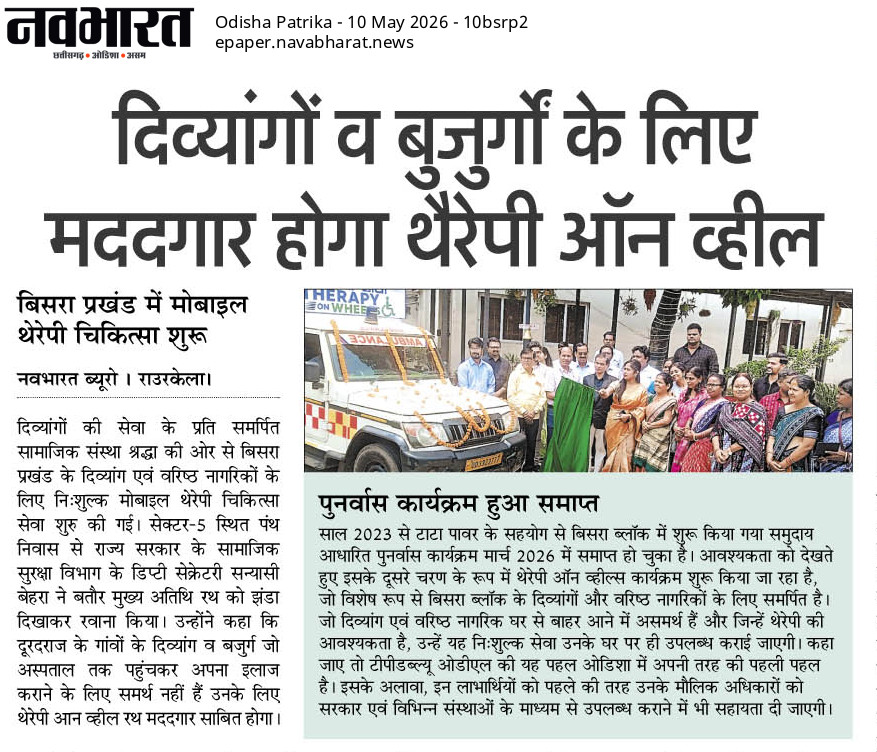
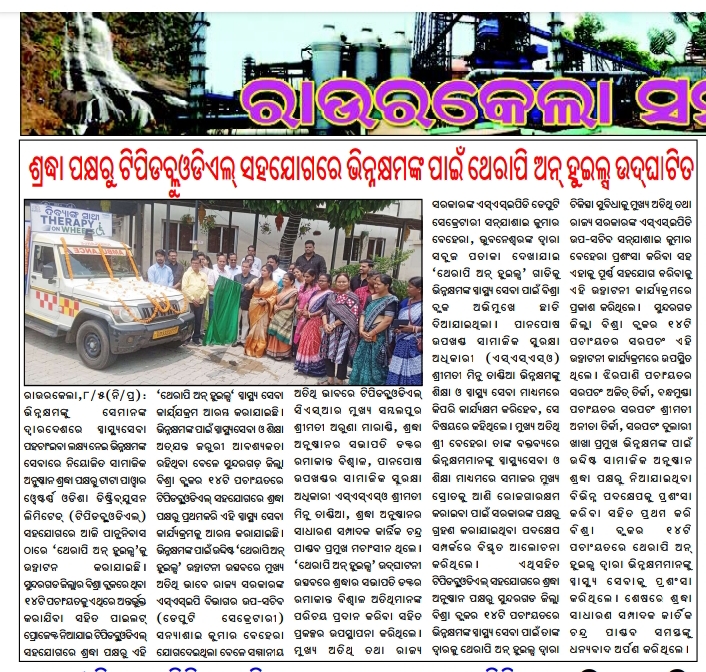
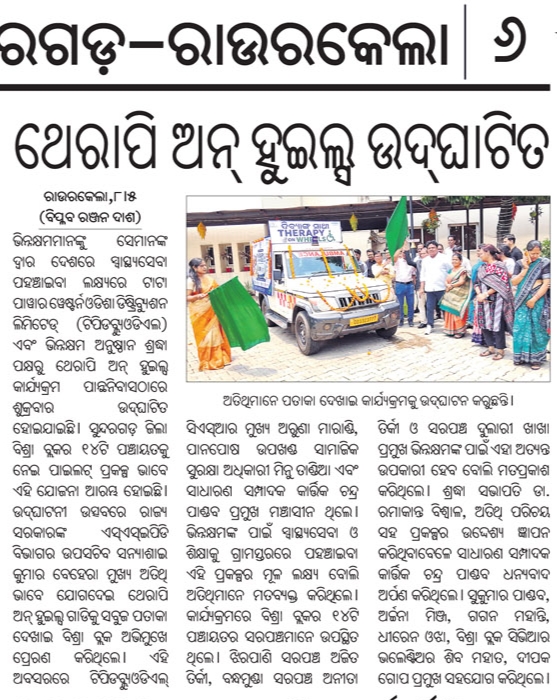
“Therapy on Wheels”—a dream shaped by lived realities, and a response to voices that often go unheard.
Shradha, as many of you know, has been working in Rourkela and the surrounding regions for children and persons with intellectual and developmental disabilities. Over the years, we have seen courage, we have seen resilience. But we have also seen distance—distance from services, from opportunities, and sometimes, from understanding.
And that distance is what we are here to reduce today.
Why “Therapy on Wheels”?
Because therapy should not be a privilege of geography. In a district like Sundargarh—rich in culture, deeply rooted in its tribal identity, yet geographically vast—access is the biggest barrier. Many families travel long distances, often losing a day’s wage, just to attend a single session. For some, it is simply not possible.
When therapy does not reach the child, the child is left behind.
“Therapy on Wheels” reverses this reality. It brings physiotherapy, occupational therapy, speech therapy, and special education support directly to the child’s doorstep. This is not charity. This is equity in action.
Redefining Education
Education is not only about textbooks. For a child with intellectual and developmental disabilities, education begins with foundational milestones that define independence and dignity:
Communicate a need
Hold a spoon
Recognize emotions
Interact with others
Too often, our systems fail to recognize this. We measure children by uniform academic standards, without understanding that development itself is diverse.
Context Matters: Inclusion in Sundargarh
In a tribal-dense district like Sundargarh, inclusion begins when we acknowledge and respect difference. Development here is shaped by multiple layers:
Linguistics
Culture
Screening
Socio-economic
Isolation
Without awareness, delays become disabilities. Without intervention, disabilities become barriers. “Inclusion” is not about fitting a child into the system. It is about reshaping the system around the child.
The Role of “Therapy on Wheels”
This mobile unit is a moving classroom, a traveling therapy center, and a bridge between professional knowledge and community wisdom.
True inclusion happens in communities. We are sending out a message: every child deserves the right to grow, learn, and belong. Inclusion is not an idea—it is a responsibility.
Dr. Ramakrishna Biswal
President, Shradha